
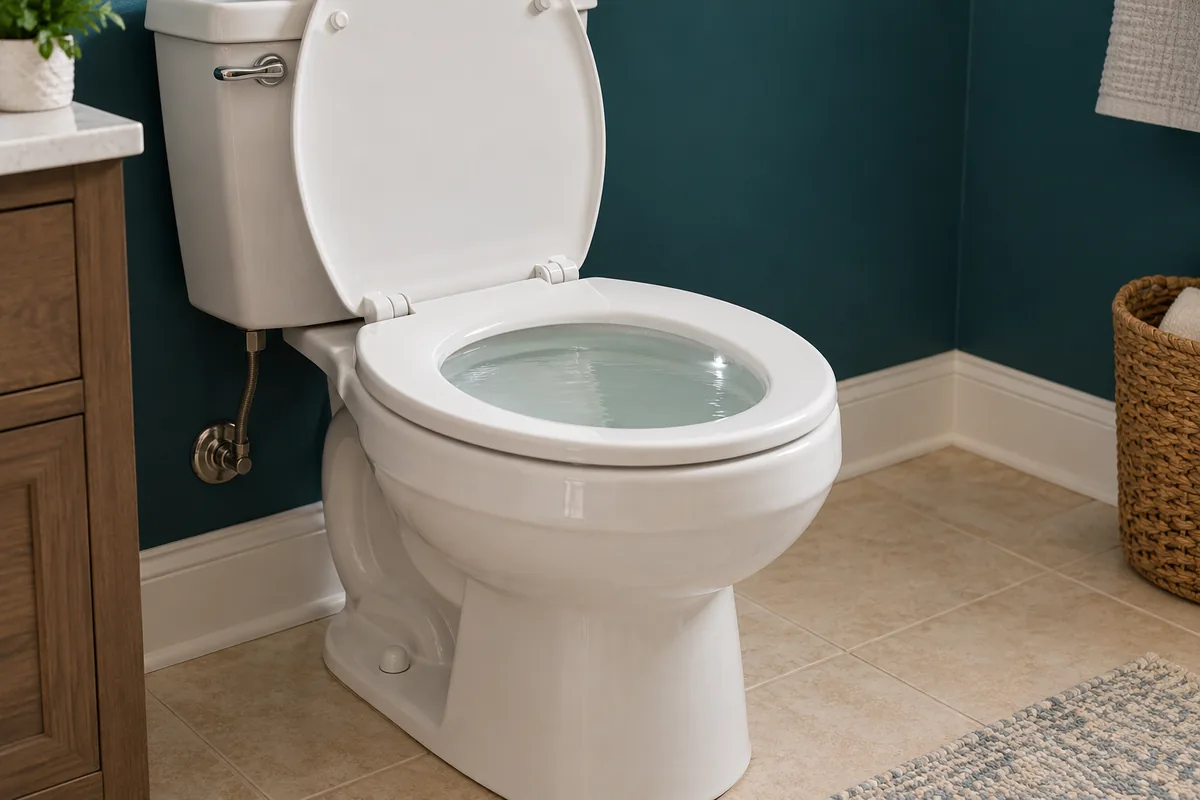
What should you do immediately?
Do not flush again. Keep children, pets, and other people out of the wet area. If water is approaching electrical equipment, outlets, or wiring, do not enter the water or touch the equipment. Arrange appropriate emergency help when there is an electrical hazard or another immediate danger.
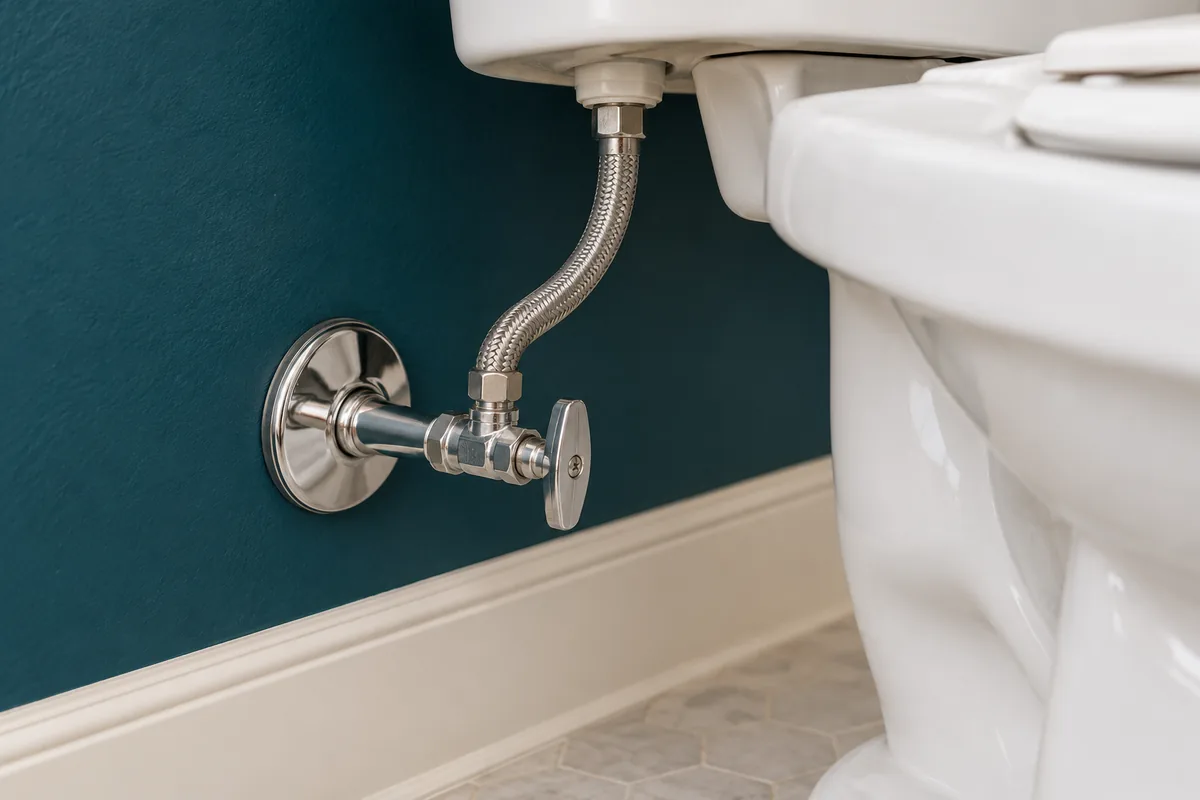
If the nearby toilet supply valve is safely reachable, close it using its normal operating motion without force. Some valves turn through several rotations, while others use a quarter-turn handle. Do not assume every handle works identically. If it is seized or begins leaking, stop rather than twisting it with a tool.
The manufacturer’s overflow guide identifies stopping incoming water as an immediate response. Closing the supply valve limits water entering the tank. It does not remove the obstruction, reverse water already in the bowl, or stop sewage entering through a shared drain.
What suggests a larger backup rather than one blocked toilet?
Wastewater in a tub or shower, several toilets backing up, or a shared drain reacting during ordinary household use can indicate a larger backup. Observe other fixtures without running additional water through them. Stop using affected plumbing and explain that pattern to the provider or property manager.
In a multi-unit property, another occupant’s water use may affect a shared system. Notify the responsible manager as soon as the backup appears. Do not assume closing your toilet’s supply valve isolates a building drainage backup. The provider needs to know whether flow continues even with the toilet supply closed.
If the bowl is simply high and no water has spilled yet, leave it unused while you arrange the next step. A falling level does not prove that the obstruction has cleared. Do not flush again just to test whether a falling water level means the obstruction has cleared.
Is it safe to plunge right away?
No, not in every situation. Do not plunge a bowl containing a drain chemical, a suspected hard object, cracked porcelain, or water so high that the tool will cause spilling. A moving fixture and multiple affected drains are reasons to stop and seek assessment rather than applying more force.
For an isolated soft clog in a sound fixture, with sufficient space to avoid splashing and no chemicals present, use a suitable toilet plunger according to its instructions. Wear appropriate protective gloves and keep the area controlled. Korky’s plunging instructions explain how tool shape and a controlled seal matter. Stop if the situation worsens or does not respond.
How should you handle water that has already spilled?
To handle spilled toilet water, treat the water as potentially contaminated, even if it looks clear. Keep people away from the spill and do not spread it into other rooms. Do not use electrical cleanup equipment in a wet area unless it is suitable and can be operated safely under its instructions.
The cleanup method depends on contamination, affected materials, and how far water has traveled. Porous flooring, wall materials, and hidden areas may require professional assessment. A surface that looks dry can still conceal moisture. For contamination concerns, the Centers for Disease Control and Prevention (CDC) floodwater guidance explains why contact with polluted water requires caution; a provider should assess the specific indoor incident.
Do not mix cleaning products or combine a cleaner with drain chemicals in the bowl. If chemicals were used before the overflow, preserve the product name and disclose it before anyone handles the fixture or wastewater. Keeping that information available protects the next person working on the problem.
What should you report when requesting help?
State whether water is still rising or spilling, whether the supply valve closed normally, and whether other drains are affected. Mention any chemical product, suspected object, previous recurring clogs, and water reaching rooms or ceilings below. Explain whether the home has another usable toilet.
For an Owasso inquiry, the emergency toilet repair information describes urgent symptoms to discuss. Owasso Toilet Fix is a referral website; phone-line availability does not guarantee dispatch or an arrival time. Confirm the independent business’s current availability, diagnostic charges, scope, and terms.
If the event follows repeated blockages, the recurring-clog article helps organize the history. Give that history to the provider instead of treating every overflow as an unrelated incident. A durable response needs to address why the bowl or connected drain failed to carry water away.
When can the toilet return to service?
Use it again only after the blockage or other cause has been addressed, the fixture is safe, and affected areas have been assessed and cleaned appropriately. Ask the provider how normal drainage was checked and whether further work is required. An empty-looking bowl after a spill is not proof that the toilet is ready for another flush.