
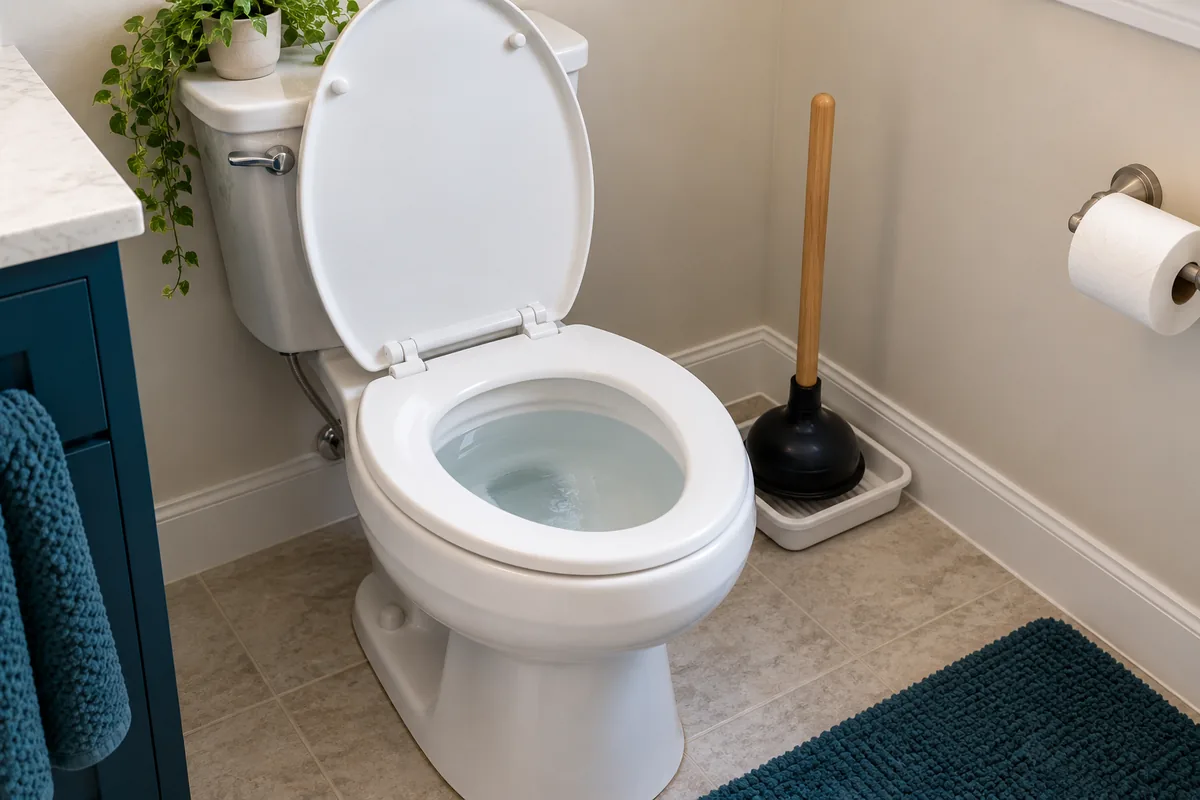
What distinguishes one blocked toilet from a shared drainage problem?
A blockage limited to one toilet points toward that fixture or its branch drain; problems across several fixtures suggest a shared drainage problem. Note whether the sink, tub, or another toilet drains slowly or backs up at the same time. Problems limited to one toilet can involve its trap or immediate branch drain. Shared symptoms can require examination farther along the drainage system.
The pattern matters more than the neighborhood or the age you assume the pipes are. Record when the clog returns, whether normal use triggers it, and whether it began after an object was dropped into the bowl. Do not run other fixtures to reproduce a backup that is already active.
What can remain caught inside the toilet?
Toilet paper can accumulate when too much enters at once. Wipes, hygiene products, cleaning pads, and other nonflushable material can obstruct the fixture or downstream drain. A toy or another hard object may remain in the trap even when water eventually passes around it.
A temporary improvement after plunging does not prove that the obstruction has left the system. If the same toilet blocks again under ordinary use, tell the provider exactly what was attempted. A toilet auger may reach a trap obstruction, but tool choice depends on the suspected material, fixture condition, and whether chemicals are present. Do not push a suspected solid object deeper with improvised wire or a general-purpose drain snake.
Can weak flushing look like repeated clogging?
Yes. Incomplete release of tank water, an incorrectly matched flapper, low refill performance, or restricted bowl passages can reduce the water available to move waste. A moving handle can make the tank appear to work, even when the flush valve closes too early or the bowl does not refill correctly.
If the bowl rises rapidly, stop flushing. If water enters but the flush is consistently weak without rising, report that distinction. The weak-flush checks published by Korky identify tank and bowl factors that can affect performance. The nonclogged flushing guide explains how to separate tank release from drainage trouble without assuming that an unseen blockage is impossible.
When is plunging reasonable, and when should you stop?
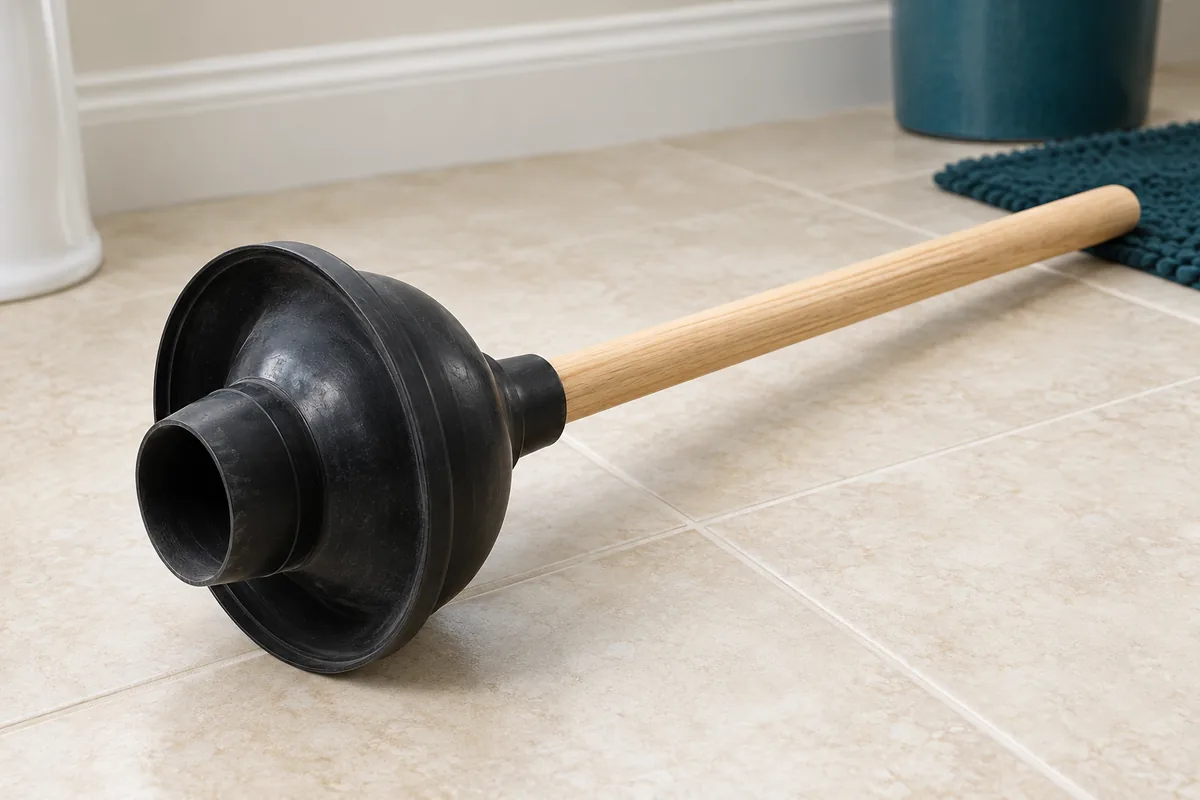
Plunging is appropriate only when the fixture is sound, there is enough room to avoid splashing, no drain chemical has been added, and the situation appears limited to a soft obstruction in one toilet. Use a toilet-shaped plunger that seals against the outlet. Wear protective gloves and keep others away from the work area.
Follow the plunger manufacturer’s instructions for positioning and controlled movement. Stop if the bowl threatens to spill, the porcelain moves, contaminated water splashes, or the blockage does not respond. Never keep flushing to check progress while water remains high. Do not add boiling water or mix chemical products in an attempt to accelerate clearing.
If a chemical has already been used, tell the provider its name before anyone plunges, opens a drain, or handles the wastewater. If a hard object is suspected, discuss retrieval rather than applying more force. The purpose of troubleshooting is to prevent further damage, not to complete every repair without assistance.
What should a recurring-clog inspection establish?
Ask where the restriction appears to be and what supports that conclusion. Clearing the toilet trap, removing the fixture, and examining a branch or shared drain are different scopes of work. Camera inspection may be useful in some cases, but it should answer a specific drainage question rather than being presented as mandatory for every clog.
Explain whether the problem existed before a recent toilet replacement or part change. That chronology can help distinguish a fixture-performance issue from a restriction that was already present. Ask what the proposed work includes, how successful clearing will be checked, and whether additional work requires a separate approval.
For local help, see the toilet-unclogging service information. The Owasso Toilet Fix overview explains the referral process. Repair work and scheduling are controlled by the independent business, so confirm coverage and fees rather than assuming a call guarantees immediate clearing.
How do you reduce the chance of another clog?
To reduce recurring clogs, keep wipes and other nonflushable products out of the toilet, even when packaging suggests otherwise. Make a wastebasket available for bathroom products and supervise children around items that could fall into the bowl. Report a developing weak flush instead of compensating with repeated flushing.
If the toilet repeatedly clogs after a professional clearing, revisit the diagnosis rather than repeating the same temporary response indefinitely. When water approaches the rim or backs up elsewhere, switch from routine troubleshooting to the overflow safety steps. A functioning toilet should handle ordinary use without repeated emergency intervention.