
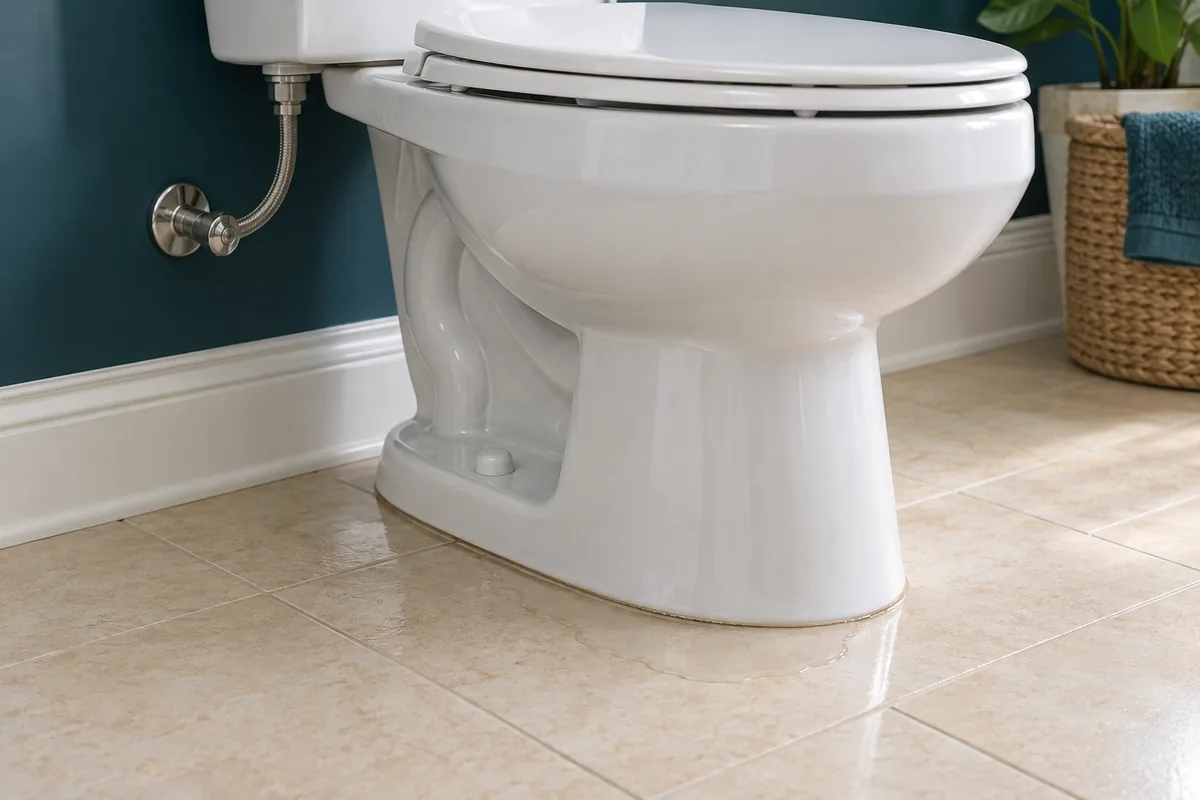
What should you do before looking for the source?
Stop using a toilet that releases water onto the floor. Close the local supply valve if water is actively entering and the valve operates normally. Do not force a corroded valve. Keep people away from contaminated water, and keep clear of wet electrical equipment or outlets. If water is reaching a ceiling or an electrical area below, stop the investigation and arrange appropriate help.
When it is safe, record where the moisture is visible before drying the outside of the fixture. Treat water associated with flushing as potentially contaminated. Do not deliberately flush again to recreate a known floor leak. Existing observations are enough to explain the problem without adding more water to the floor.
Can a tank or supply leak create a puddle at the base?
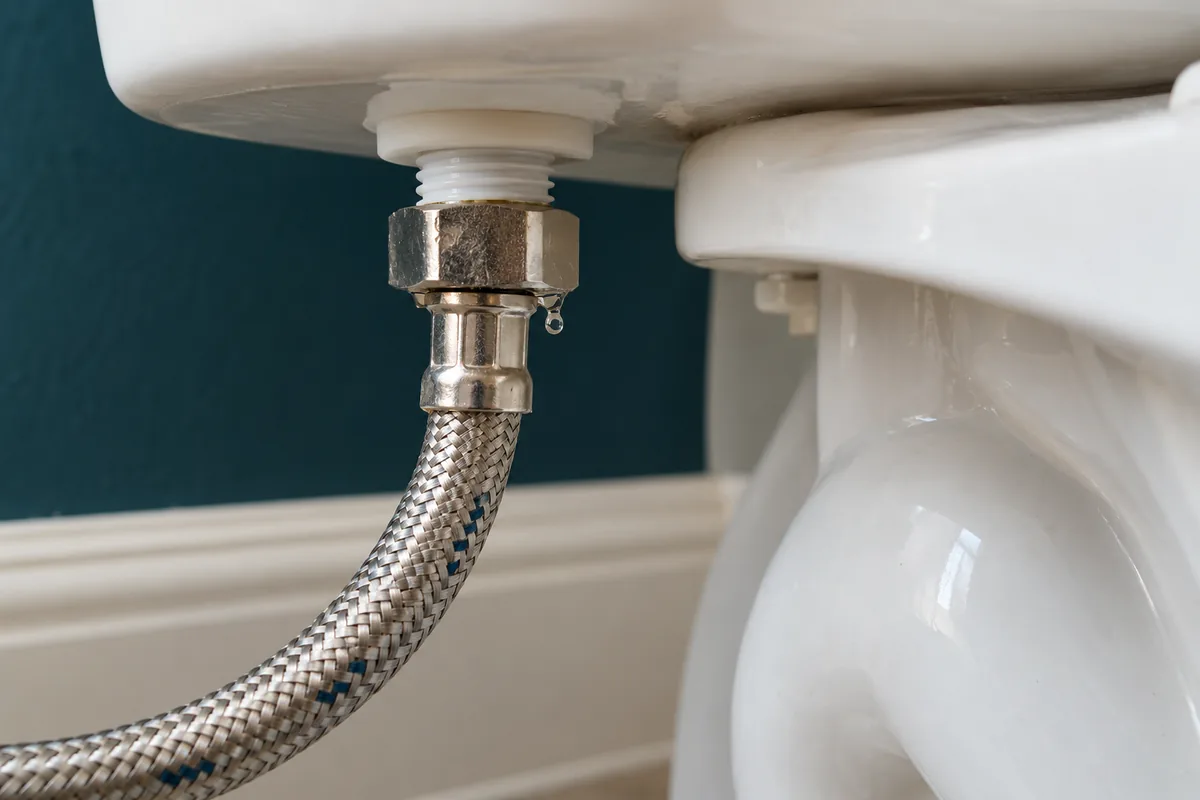
Yes. Water can travel down porcelain or along the supply line before collecting beside the toilet. Inspect accessible exterior surfaces without loosening anything: the supply connector beneath the tank, tank bolts, the underside of the tank, and the joint between a separate tank and bowl.
Look for the highest visible wet point. A connector that beads while the toilet is idle suggests a different path from water that appears only after the flush. On a two-piece toilet, seals and hardware between the tank and bowl can leak. Korky’s tank-to-bowl leak guide describes that separate repair area. Do not respond by tightening every nut; excessive force can damage fittings or porcelain.
What symptoms make the floor seal a concern?
Moisture emerging from beneath the bowl during flushing, persistent drain odors, or a toilet that moves can raise concern about the floor seal or flange. The seal connects the toilet’s waste outlet to the drain opening. Movement, improper fit, flange damage, or an unsuitable supporting floor can prevent that connection from remaining secure.
These symptoms are not a confirmation. Water from above may reach the same spot. A dry-looking base does not rule out water passing beneath the floor. Explain any ceiling stain, soft flooring, or previous floor-height change. The wax-ring symptom guide explains what can and cannot be inferred before the toilet is lifted.
Could the moisture be condensation?
Yes. Condensation forms on a cool exterior surface when surrounding air conditions allow moisture to collect. Water spread across the outside of a cold tank may therefore have a different origin from a drip at one fitting. However, surface moisture does not make another leak impossible. Both can occur together.
Note whether the tank exterior is generally damp or whether water begins at a specific connection. Mention bathroom ventilation, recent use, and whether moisture is present while the toilet sits unused. Do not conclude that a puddle is harmless condensation based only on clear-looking water. A provider should evaluate the actual path and any damage already present.
What does a lasting repair need to address?
A repair should match the confirmed source. Supply work may involve a connector, shutoff, or fill-valve connection. Tank leakage may involve bolts, a gasket, or damaged porcelain. A floor-seal repair usually requires lifting the fixture and examining the flange and support before selecting the replacement seal.
Caulk around the base is not a replacement for a failed waste seal. Adding a new seal without correcting rocking, flange damage, or weakened flooring can leave the underlying problem unresolved. Manufacturer toilet installation guidance shows why mounting and sealing must be considered together. Product-specific instructions determine the actual installation method.
Ask the provider to separate the immediate leak repair from any damaged-floor work. Request an explanation of what can be inspected before removal and what may become clear only afterward. Approve additional work after the findings are explained, rather than assuming that every base leak needs the same parts.
What information should you give the provider?
Describe when the puddle first appeared, where water is highest on the fixture, whether the bowl rocks, and whether a remodel or toilet reset preceded the problem. Mention previous attempts to tighten connections or apply sealant. Photos of the dry exterior and the original moisture pattern can help communicate the history without repeated flushing.
The toilet-leak repair page lists useful symptoms for an Owasso inquiry. Owasso Toilet Fix connects callers with independent service businesses; confirm availability, credentials, price, and repair terms directly. The separate leak repair cost guide covers budgeting examples rather than diagnosing your fixture.
After repair, ask how the connections and floor area were checked under normal operation. Continue watching the area for fresh moisture or renewed movement. A dry surface immediately after cleanup is encouraging, but it does not replace checking the actual leak path and supporting materials.