
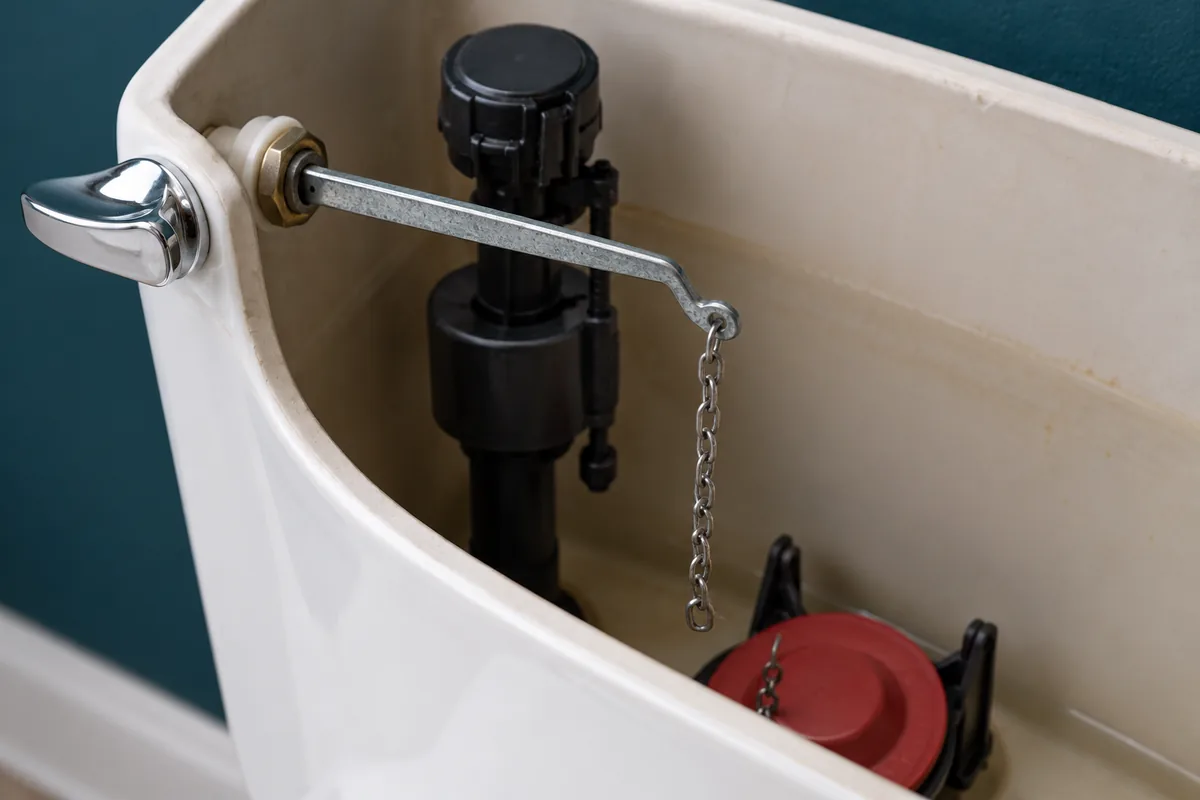
What should you check first when the toilet will not flush?
First distinguish failure to release tank water from failure to drain bowl water. A loose handle that does not lift the flush mechanism can make the toilet appear completely unresponsive. An empty or incompletely filled tank can produce a similar weak result. Neither observation establishes that the drain is clear.
If water enters the bowl and the level climbs instead of falling, stop flushing and consider a hidden restriction. A toilet can be clogged even when no paper or object is visible. If the bowl already contains high water, do not use another flush as a diagnostic test. Consult the recurring-clog guide for drainage symptoms.
What can you learn from the handle and linkage?
On many conventional tanks, a lever lifts a chain attached to a flapper. A disconnected chain means the handle moves without opening the outlet. Excess slack may prevent enough lift, while an overly tight chain can prevent closure after a flush. A broken lever or sticking handle can interrupt the action.
Other toilets use rods, cables, buttons, or canister assemblies. Identify the mechanism before making an adjustment. Set the lid on a padded stable surface, and do not force unfamiliar clips or connections. Follow the toilet manufacturer’s instructions and turn off the supply before component work. Do not open a pressure-assist vessel or apply gravity-tank advice to it.
What should you check when the tank has too little water?
Check whether the supply was deliberately turned off after an earlier leak or repair. An empty tank cannot provide its intended flush. Ask other household members before reopening it. If the shutoff is stuck, corroded, or leaking, stop rather than forcing it in an attempt to restore filling.
Slow or incomplete filling can involve the supply, debris in a serviceable fill valve, or a valve fault. Use the marked waterline and product instructions when assessing the level; raising it indiscriminately can create overflow-tube flow instead of solving the flush. Korky’s slow-filling guide explains the distinction between supply restrictions and valve problems.
What if water releases but the flush is weak?
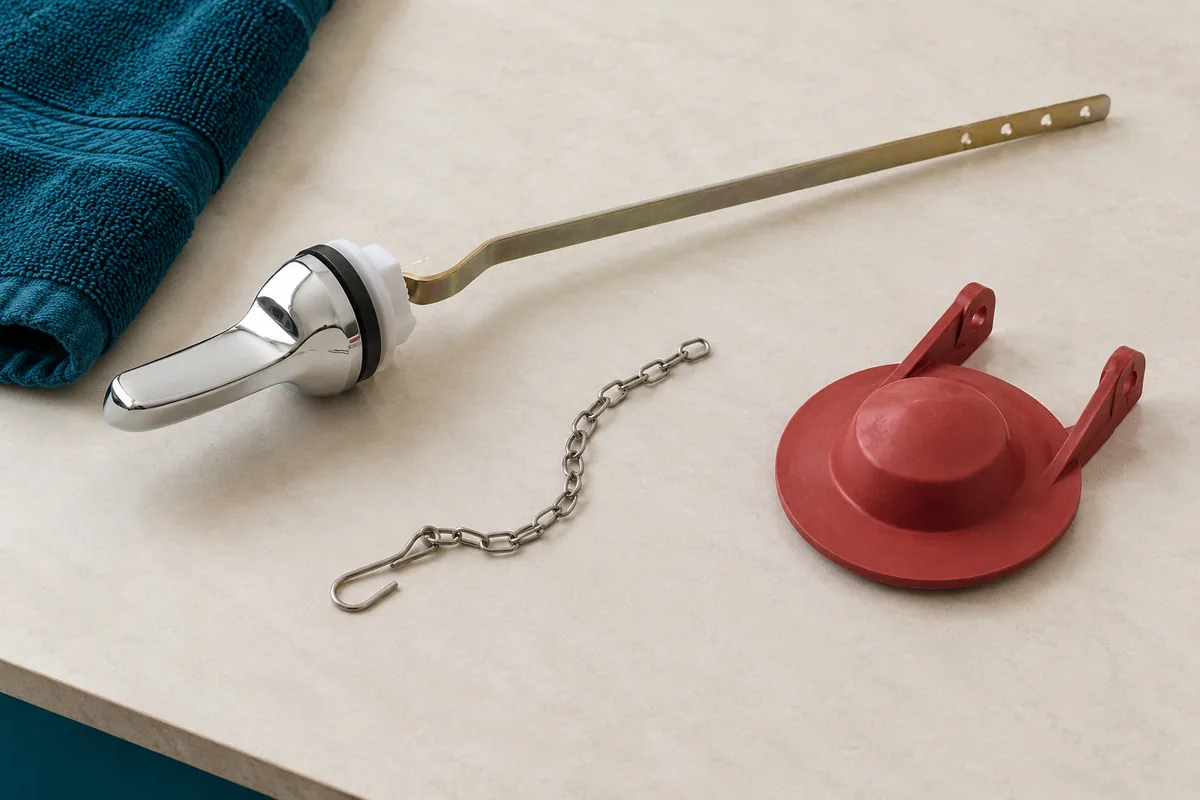
A flush mechanism that closes too early may release less water than intended. An incompatible replacement flapper or incorrectly set adjustment can affect that release. Bowl refill problems, restricted rim passages, and a partial trap blockage are other possibilities. The handle alone cannot distinguish among them.
Describe what you see: does the tank empty normally, does the bowl rise, does water swirl weakly, or does the bowl fail to refill afterward? These are different observations. Do not compensate indefinitely by holding the handle down; that can hide an adjustment problem and does not establish that the drain is clear.
The manufacturer’s weak-flush troubleshooting guide is a reference for conventional toilet checks. Use instructions for the actual model before cleaning passages or servicing internal parts. Do not use metal objects that can damage porcelain or mix cleaners with any drain chemicals already present.
How do you choose between a handle, flapper, or tank kit?
To choose between a handle, flapper, or tank kit, check the failed action and model compatibility. A disconnected chain does not automatically justify replacing every tank part. Conversely, a handle replacement will not correct a damaged flush-valve seat or a restricted drain.
Record the brand, model, and any recently fitted part numbers. Mention whether the problem began immediately after a repair. A provider can then evaluate whether a compatible adjustment is possible or whether a component needs replacement. Ask what the proposed repair is intended to change and how normal operation will be checked afterward.
For an Owasso service inquiry, see the tank-parts replacement information. Owasso Toilet Fix provides educational information and referrals, while the independent service business confirms coverage, scope, qualifications, and price. The tank repair cost article is a separate budgeting resource, not proof that a particular part has failed.
When should you leave the toilet out of use?
Stop when water rises toward the rim, leaks outside the fixture, or reaches damaged flooring. Cracked porcelain and a moving bowl require assessment before more test flushing. Stop using the affected drainage system until a provider evaluates it if more than one fixture backs up.
Once an appropriate repair is complete, the handle or button should return normally, the flush mechanism should close, and the tank and bowl should refill as designed. Watch for continued running as well as flushing performance. A new running-water symptom after a linkage adjustment may mean the seal is being held open rather than that the original problem has returned.