
What is the difference between filling and losing water?
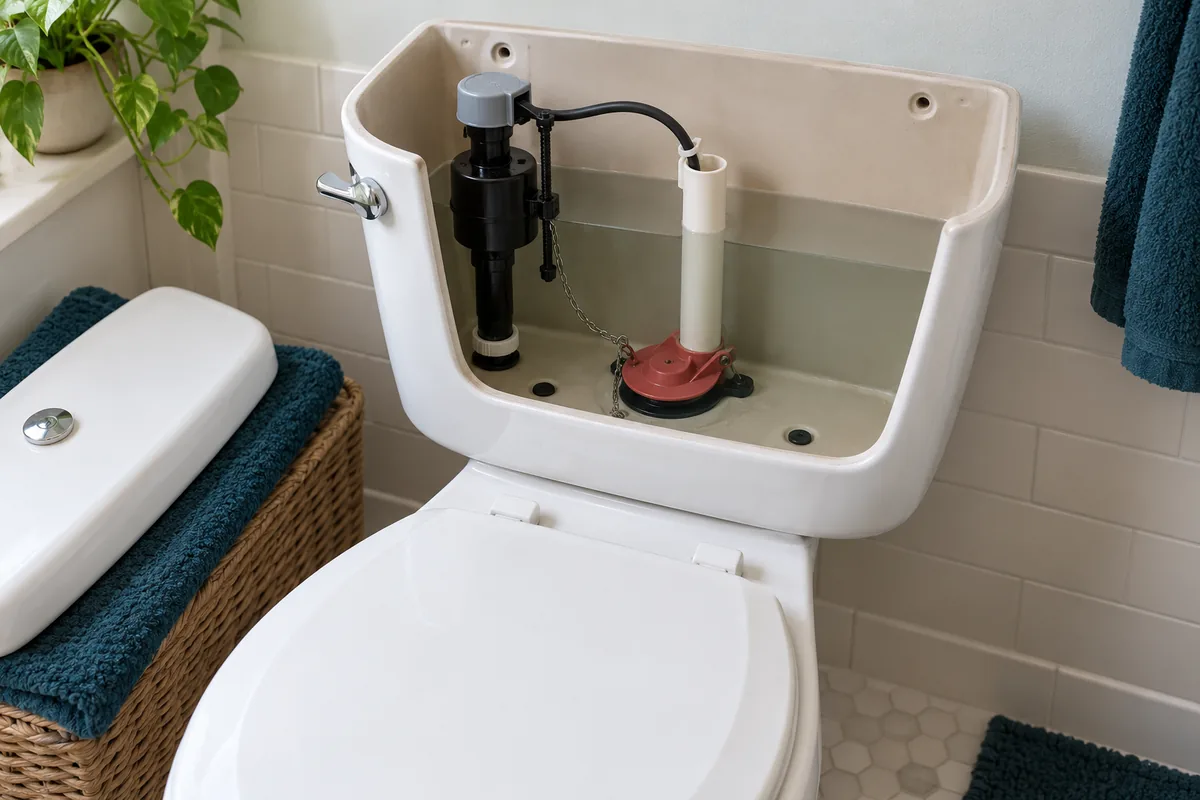
Filling brings water into the tank; losing water through the flush outlet makes the fill valve replace it. The fill valve brings water into the tank. The flush valve releases stored tank water into the bowl. On many gravity-flush toilets, a rubber flapper closes that outlet after flushing; other models use a canister seal or another mechanism.
Normal refilling ends when the water reaches the manufacturer’s marked level. Watch a complete refill if the toilet is not leaking onto the floor or threatening to overflow. Note whether the sound continues without stopping or stops and returns later. Continuous flow and periodic refilling can have different causes, even when both sound like a running toilet.
What does the tank water level tell you?
Water entering the overflow tube suggests the fill valve is not stopping at the intended level. Possible explanations include an incorrectly adjusted float or a valve that no longer shuts off properly. Use the tank’s waterline and the actual valve instructions rather than copying a height from a different toilet.
If the water stays below the overflow opening but the tank repeatedly refills, water may be escaping through the flush outlet. A flapper that does not sit flat, debris on a sealing surface, or a damaged flush-valve assembly can allow that loss. Replacing the fill valve alone may leave the leak unchanged.
For a nonleaking fixture, the United States Environmental Protection Agency (EPA) describes a food-coloring test: color appearing in the bowl without flushing indicates tank-to-bowl leakage. Follow its test instructions and flush afterward to reduce staining. The test locates a leakage path; it does not establish which replacement part fits.
Could the chain or handle hold the seal open?
Yes. A chain with insufficient slack can prevent a flapper from settling onto its seat. A sticking handle can produce a similar result. A chain that is too loose can catch beneath the flapper or fail to lift it correctly. Observe where the chain rests after the handle returns instead of repeatedly jiggling the handle and assuming the problem is solved.
Before touching or adjusting tank hardware, turn off the water if the shutoff moves normally and follow the manufacturer’s instructions. Support the ceramic lid on a padded, stable surface. Stop if the valve is seized, the porcelain is cracked, or water is escaping outside the fixture. Pressure-assist and concealed systems need their own instructions; do not treat them as ordinary open gravity tanks.
Which part should be repaired or replaced?
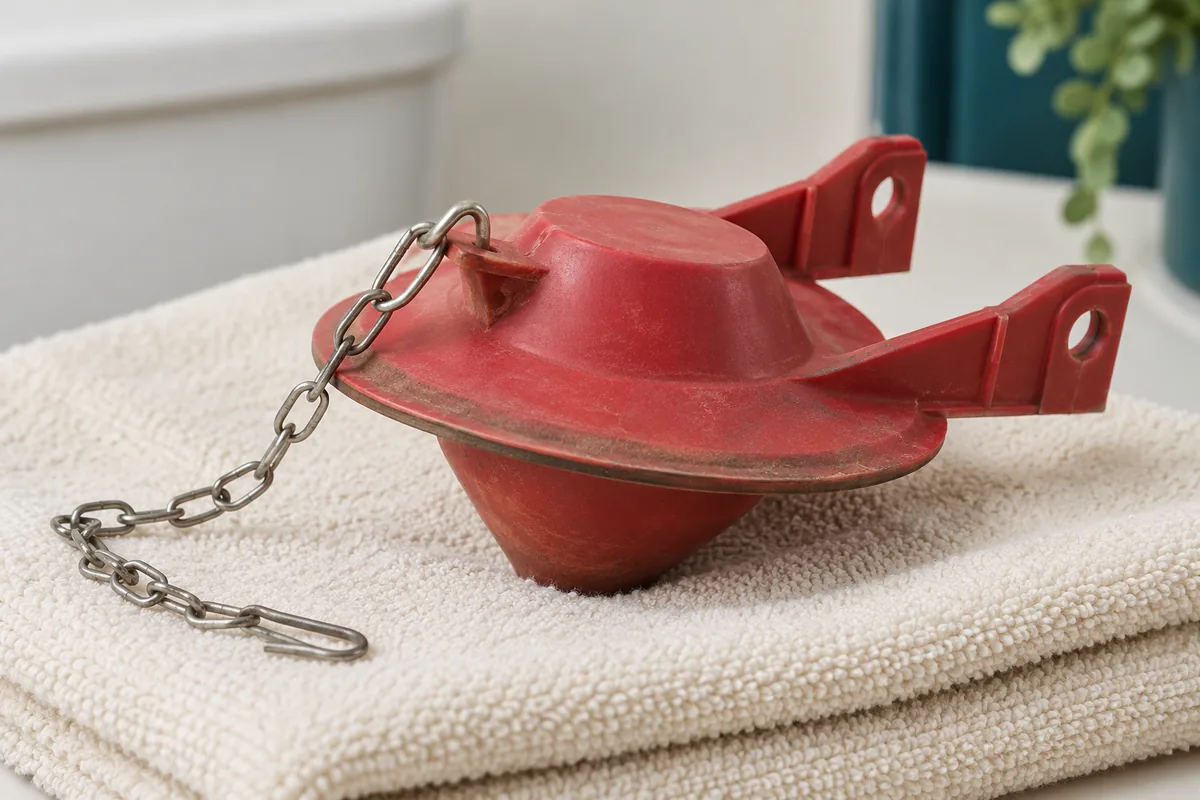
Choose the repair after identifying the water path and toilet model. A worn flapper or canister seal calls for a compatible seal. An incorrect float setting may call for adjustment. A fill valve that continues admitting water may need servicing or replacement, depending on its design. A damaged sealing seat or overflow assembly can require work beyond a simple flapper change.
Find the model information on the toilet or its paperwork before buying parts. Similar-looking seals can differ in opening size, attachment, and flush behavior. A part that clips into place is not necessarily a correct match. Kohler’s running-toilet guide explains the distinction between adjustment and component faults; the instructions for your actual model take precedence.
If a repair was recently attempted, record the installed part and what changed afterward. That information is more useful than another speculative replacement. Ask a provider to check operation through a full refill and a period of nonuse, rather than judging success only by whether the first flush sounds normal.
When should you stop troubleshooting?
Close the toilet’s supply valve, without forcing it, if water continues running and you need to leave the fixture unattended. A closed supply can prevent normal refilling, so tell other household members that the toilet is temporarily out of use. Do not disconnect a supply line while it remains pressurized.
Seek help when the shutoff leaks, the cause remains unclear, compatible parts are uncertain, or the repair would require removing the tank. Water on the floor changes the priority: stop using the toilet and investigate that external leak before continuing a tank-only diagnosis.
For an Owasso service inquiry, the running-toilet repair page explains the symptoms to report. Owasso Toilet Fix provides information and referrals; an independent provider confirms availability, scope, credentials, and price. For budgeting rather than diagnosis, see the separate tank repair cost guide.
How can you check whether the problem returns?
To check whether the problem returns after repair, confirm that the handle returns, the flush outlet closes, the tank stops at its intended level, and the bowl receives its normal refill. Listen again when the bathroom has not been used. A quiet moment immediately after adjustment does not rule out an intermittent leak.
Do not add in-tank cleaning products unless the toilet and component manufacturers allow them. Keep the model and replacement-part details with your home records. If the sound changes to persistent hissing, use the hissing-noise guide to describe its timing accurately instead of assuming the same part has failed again.