
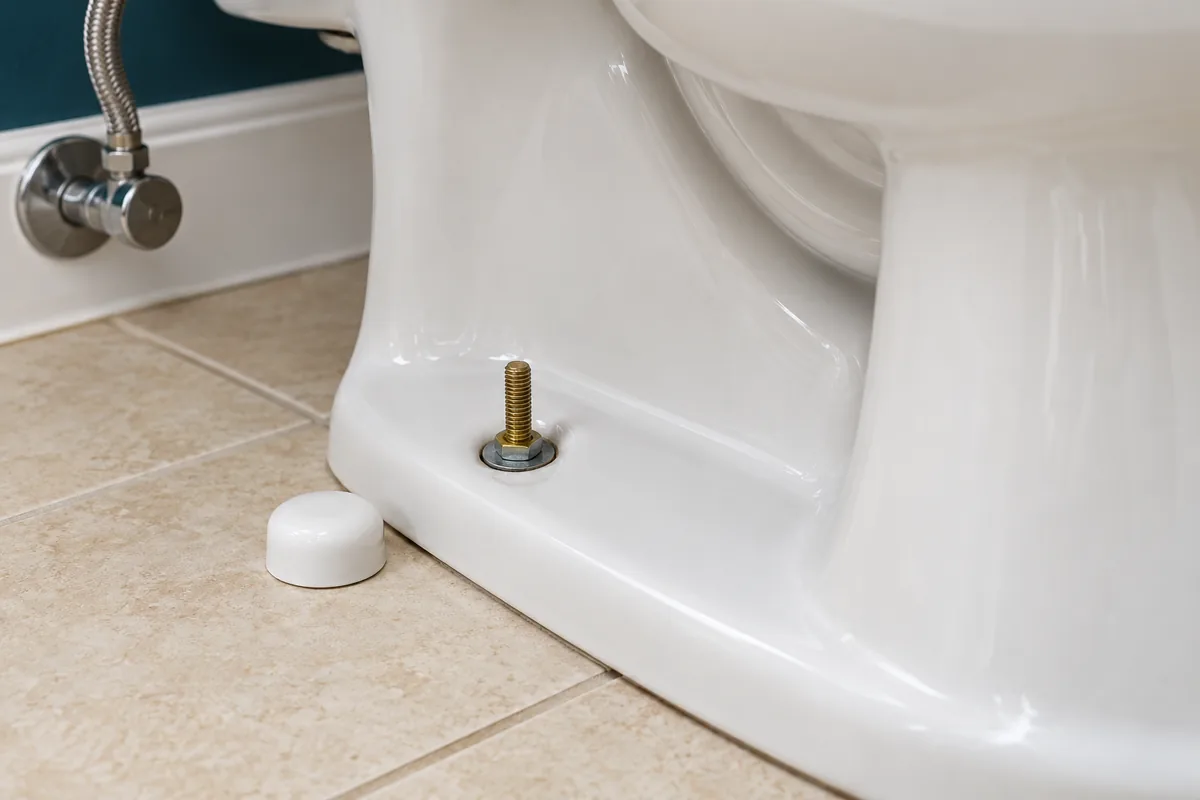
How do you distinguish bowl movement from a loose seat?
To distinguish bowl movement from a loose seat, observe whether the porcelain moves relative to the floor or only the seat shifts on its hinges. A loose seat can shift on its hinges while the fixture remains securely mounted. If the whole bowl moves relative to the floor, the mounting and support need assessment. Do not keep rocking it deliberately to demonstrate the amount of movement.
Note any moisture, cracking, soft flooring, or drain odor without putting additional force on the toilet. Stop using the fixture if those symptoms accompany movement. If the uncertainty is simply whether the seat or bowl shifts, describe where the movement appears rather than tightening every visible fastener.
What can allow a floor-mounted toilet to move?
A sound installation needs both support beneath the bowl and secure attachment at the flange. Loose mounting hardware, an uneven finished floor, damaged flange mounting points, or weakened subflooring can interfere with that support. The same visible rocking motion can result from several different faults.
Recent flooring work or a toilet removal is useful history, but it does not identify the failed part by itself. Mention whether the movement began after a reset, developed gradually, or was present when you moved in. Korky’s wobbling-toilet guide discusses mounting and floor-related causes. A provider must check your installation rather than assume that loose bolts are the only explanation.
Why can tightening the bolts make the situation worse?
The closet bolts secure porcelain to the mounting arrangement; they are not intended to force an uneven bowl onto a damaged or unsupported floor. Excess force can crack the base or damage hardware. A spinning bolt can indicate a mounting problem that more turning will not resolve.
Do not use an impact driver or keep tightening until movement disappears. Do not follow a torque value from an unrelated toilet model. The fixture manufacturer’s installation instructions determine the applicable method. If a cap or nut is corroded, inaccessible, or accompanied by a crack, leave further disassembly to a qualified provider.
Can movement damage the floor seal?
Yes. Movement can disturb the connection between the toilet outlet and floor drain. A toilet may therefore need both support correction and resealing, even if the original complaint was wobbling rather than a visible leak. Water can travel beneath the fixture or flooring before a puddle becomes obvious.
A new wax ring alone will not correct a broken flange or soft floor. Conversely, a support shim does not repair a failed waste seal. Read the wax-ring symptom guide if movement is accompanied by moisture or odors. Do not keep using a leaking toilet to see whether the problem becomes more obvious.
When are support shims appropriate?
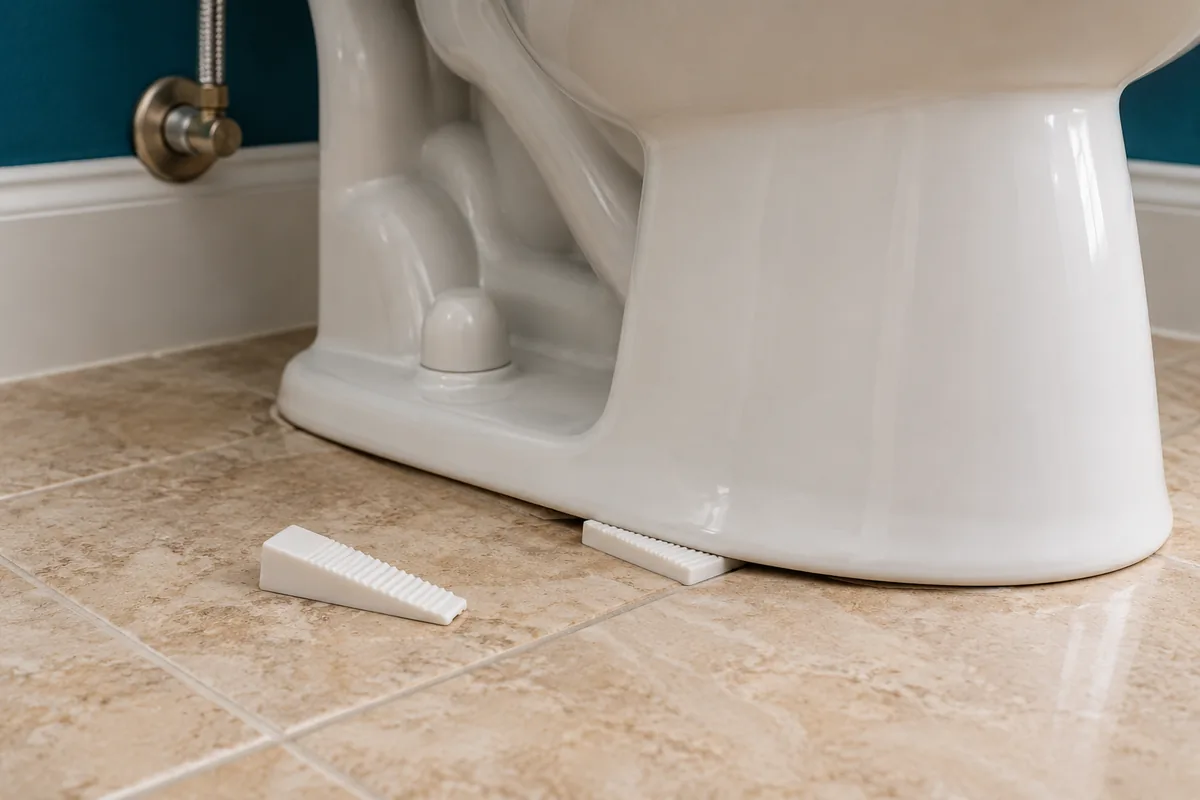
A provider may use suitable noncompressible support where an otherwise sound installation needs leveling or stable contact. The need, placement, and finish depend on the fixture and floor. Improvised cardboard, soft wood scraps, or a random wedge are not a substitute for assessing the flange and support.
The Fluidmaster installation instructions show how securing and support form part of an installation process. Use the instructions for the selected hardware and toilet. Do not interpret an illustration of a shim as an instruction to slide material beneath a leaking toilet and consider the repair complete.
Caulk around the outside of the base does not replace structural support or the internal drain seal. Final finishing should happen after the underlying installation is sound and the applicable instructions and local requirements have been addressed.
What should a proper inspection include?
Ask the provider to distinguish a seat issue from bowl movement, inspect the mounting hardware, and assess visible floor condition. If removal is needed, the flange, seal, toilet outlet, and supporting materials can be checked. The provider should explain why removal is necessary and what additional findings could change the scope.
Tell the business about ceiling stains below, flooring that feels soft, previous reseals, and any bathroom remodeling. Ask whether the proposal includes correcting the support, renewing a disturbed seal, reconnecting the supply, and checking for leaks. Damaged-floor work may require a separate scope rather than being included automatically in a simple reset.
For an Owasso inquiry, see the toilet reset and reseal information. The Owasso Toilet Fix overview explains the referral role. Independent providers confirm availability, credentials, diagnosis, pricing, and terms; a website description cannot establish what is wrong beneath your fixture.
How do you know the repair addressed the cause?
To check whether the repair addressed the cause, confirm secure support under normal use without rocking, new leakage, or stressed porcelain. Ask how the drain connection and supply were checked after the work. Keep the repair details, especially if the flange or floor was corrected, so any future provider understands what was done.
Do not tighten the bolts forcefully again if movement returns. Report when it returned and whether moisture or odors appeared with it. Repeated movement is a reason to revisit the installation, not to assume that every toilet simply needs occasional tightening.