
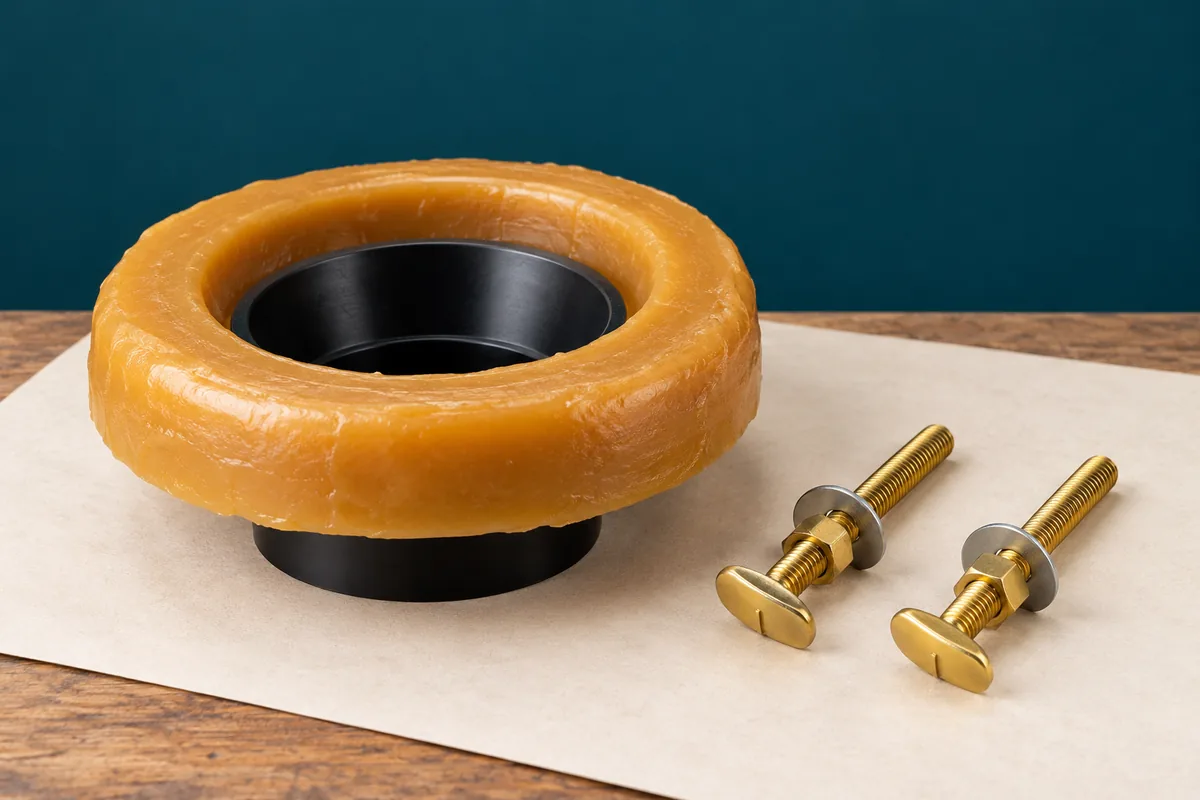
What does a toilet wax ring actually seal?
The wax ring seals the toilet’s waste outlet to the drain connection beneath the bowl. It is different from a tank flapper, tank-to-bowl gasket, or water-supply washer. Those parts control different water paths, so the word “seal” alone is not a useful diagnosis.
The floor connection must hold the fixture securely. The flange connects to the drain and provides mounting points; the floor supports the toilet. A replacement ring cannot compensate for a broken mounting point or deteriorated floor. Some installations use approved wax-free seals instead, so confirm the installed system before buying parts.
Which visible symptoms deserve attention?
Water emerging from beneath the toilet during flushing is a reason to stop using it. Persistent drain odors or movement can justify inspection of the floor connection. Staining on the ceiling below, damp flooring, or a soft area around the fixture increases concern about hidden moisture, regardless of which part caused it.
No single symptom proves that the ring is the cause. A supply leak can run down the porcelain. Tank hardware can drip toward the same floor area. Odors can originate elsewhere in the drainage system. Mounting or support problems can make a toilet rock even before a leak becomes visible.
Make observations without deliberately reproducing a known leak. Note what happened during previous use, dry accessible exterior surfaces when safe, and leave the toilet out of service if flushing releases water. See the base-leak guide for a fuller comparison of water paths.
Does rocking mean that only the wax ring needs changing?
No. Rocking is a support or mounting symptom that may damage the waste seal. Loose hardware, an uneven surface, a damaged flange, or a weakened subfloor can allow the bowl to move. A ring replacement that leaves that movement unchanged is an incomplete response.
Do not tighten the closet bolts forcefully. The correct repair depends on what is holding the fixture, how it meets the floor, and whether the supporting materials are sound. Korky’s wobbling-toilet guide identifies several mounting-related causes; the professional should inspect your actual installation rather than infer the cause from movement alone.
What happens when a professional lifts the toilet?
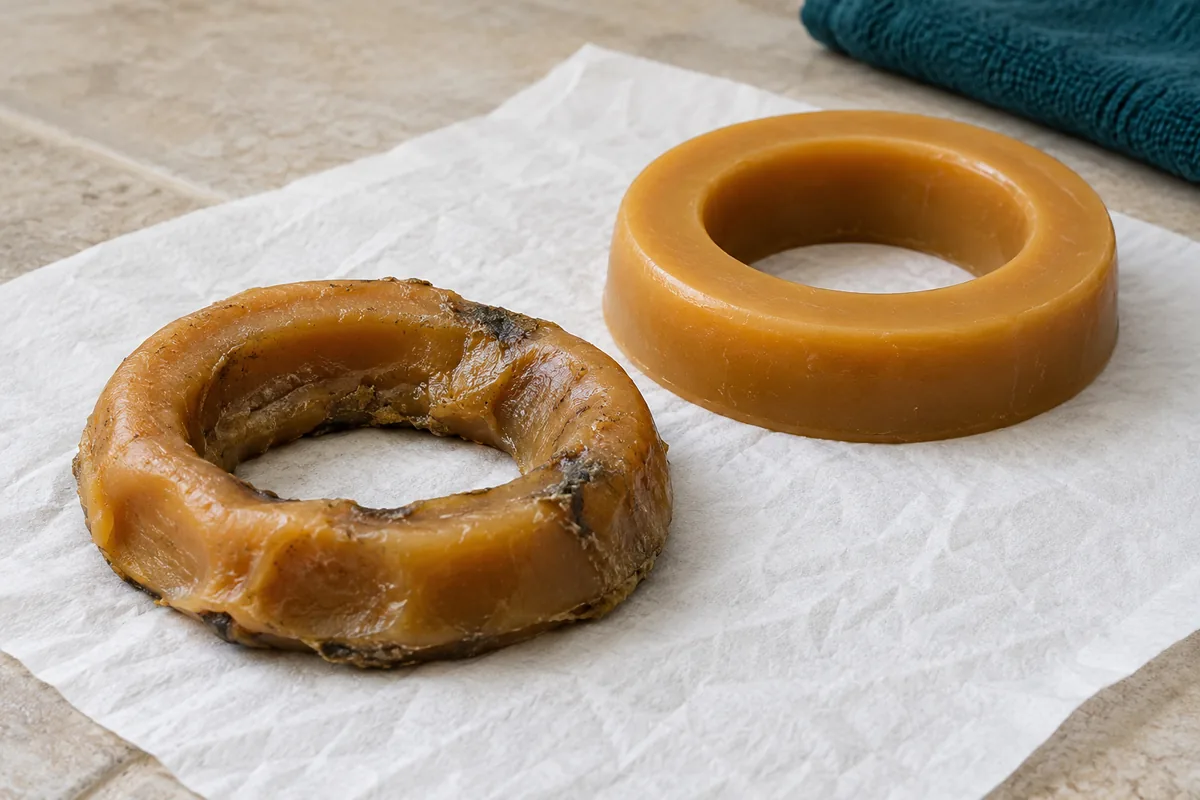
Removal exposes the floor seal, flange, and nearby support. The provider can assess the old seal’s contact, the mounting points, the drain connection, and visible moisture damage. The toilet’s outlet and porcelain need inspection before the fixture is considered suitable for reuse.
A compressed wax ring is not reused after the toilet is lifted. The replacement must match the fixture and installation. Flange height, finished flooring, and the selected seal’s instructions matter; simply stacking material until the bowl sits higher is not a diagnosis or a sound default repair.
The Fluidmaster seal installation instructions illustrate the importance of following the chosen product’s requirements. Wax and wax-free systems do not all install the same way. A statement that one product fits an installation should come from the product instructions and inspection, not from a generic photograph.
What should you ask before agreeing to resealing?
Ask whether the proposed work includes removal, flange inspection, a suitable new seal, secure support, reconnection, and checks for leakage. Ask how the business handles unexpected flange or floor damage. Those findings can change the scope, and additional work should be explained before you approve it.
Tell the provider whether the toilet was recently reset, whether flooring was changed, and whether the leak appeared immediately or developed later. Repeated seal failures warrant examination of the installation rather than another identical ring replacement. Keep photographs and past work descriptions available so the history is clear.
For an Owasso inquiry, review the toilet reset and reseal service information. The website’s toilet repair overview explains how referrals work. Independent providers confirm their own service availability and terms; a wax-ring symptom description is not a guaranteed diagnosis or fixed-price job.
Can maintenance prevent every seal failure?
No. Maintenance cannot prevent every seal failure, and there is no universal replacement schedule established by the neighborhood or the toilet’s appearance. Address new movement, moisture, or persistent odors when they appear. Do not lift or shift a toilet casually; disturbing a compressed seal can require resetting the fixture correctly.
Keep the area accessible for inspection, and do not conceal a known leak with additional caulk. Follow the installer and manufacturer instructions for final sealing around the base after the underlying connection is sound. If the concern is price rather than symptoms, the separate seal replacement cost guide discusses budgeting; inspection determines the actual work needed.