
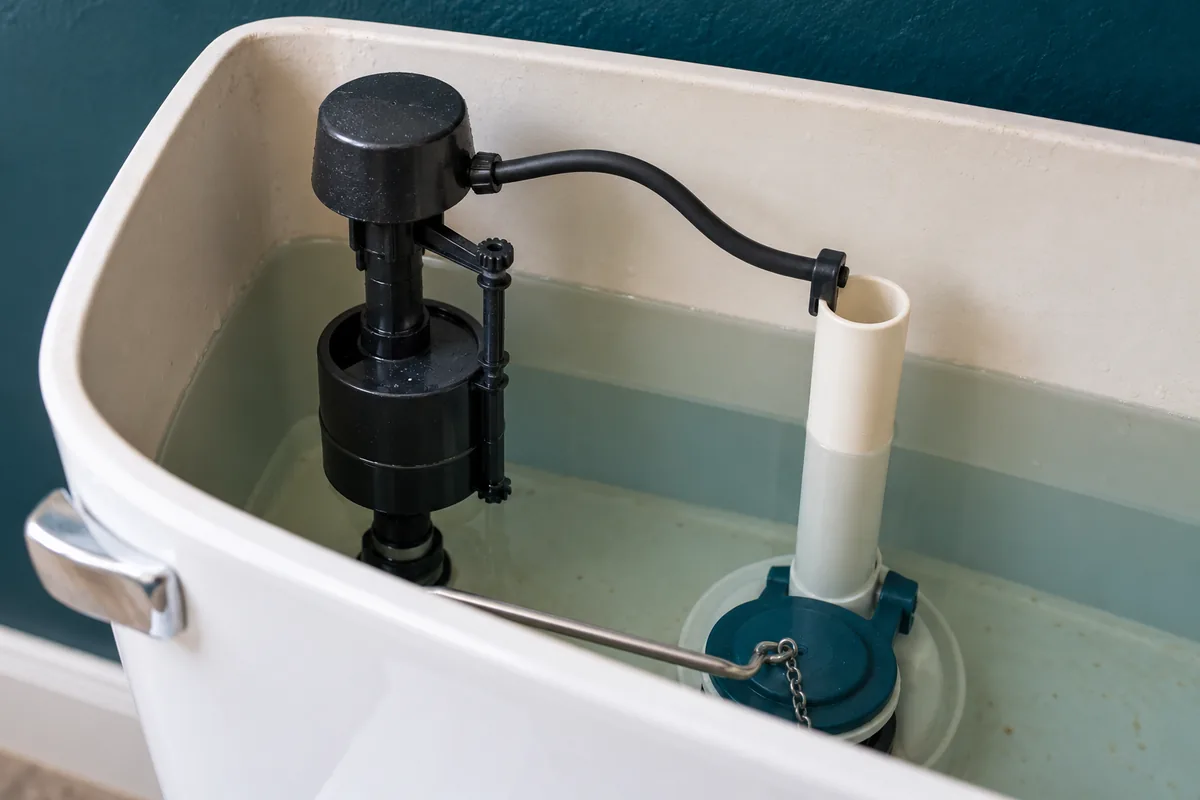
When is a refill sound normal?
A short refill sound after flushing is different from persistent or recurring hissing. The important observation is whether the sound ends when the tank reaches its intended water level. There is no single sound duration that applies to every toilet, supply condition, and valve design.
Listen without repeatedly flushing. Does the hiss continue steadily, stop and return while the toilet is unused, or appear with a weak refill? Note whether water is visible entering the overflow tube or trickling into the bowl. These observations help separate the source of the sound from the reason water continues moving.
What indicates that the fill valve is not shutting off?
Incoming water continuing after the tank reaches its marked waterline indicates that the float or valve needs assessment. An incorrect setting, interference with float movement, or an internal valve fault can leave the inlet open. Water may then pass into the overflow tube instead of stopping at the intended level.
Do not bend parts or raise the overflow tube as an improvised cure. The tank, valve, and overflow assembly are designed to work together. Check the instructions for the installed valve and toilet. Pressure-assist, concealed, and electronic systems have different service requirements and should not be dismantled using guidance for an ordinary gravity-flush tank.
Could a leaking flush seal make the fill valve hiss?
Yes. A fill valve can make noise while correctly replacing water that is escaping elsewhere. If a flapper or canister seal leaks into the bowl, the tank level falls and the inlet opens again. Replacing the noisy valve without checking the flush outlet can leave that water loss unresolved.
Compare the symptoms with the running-after-flushing guide. A tank-to-bowl dye test, performed according to the toilet manufacturer’s instructions, can help identify an internal leak path. It does not show which seal fits, and it does not rule out an additional supply or valve problem.
Can debris or mineral deposits restrict the valve?
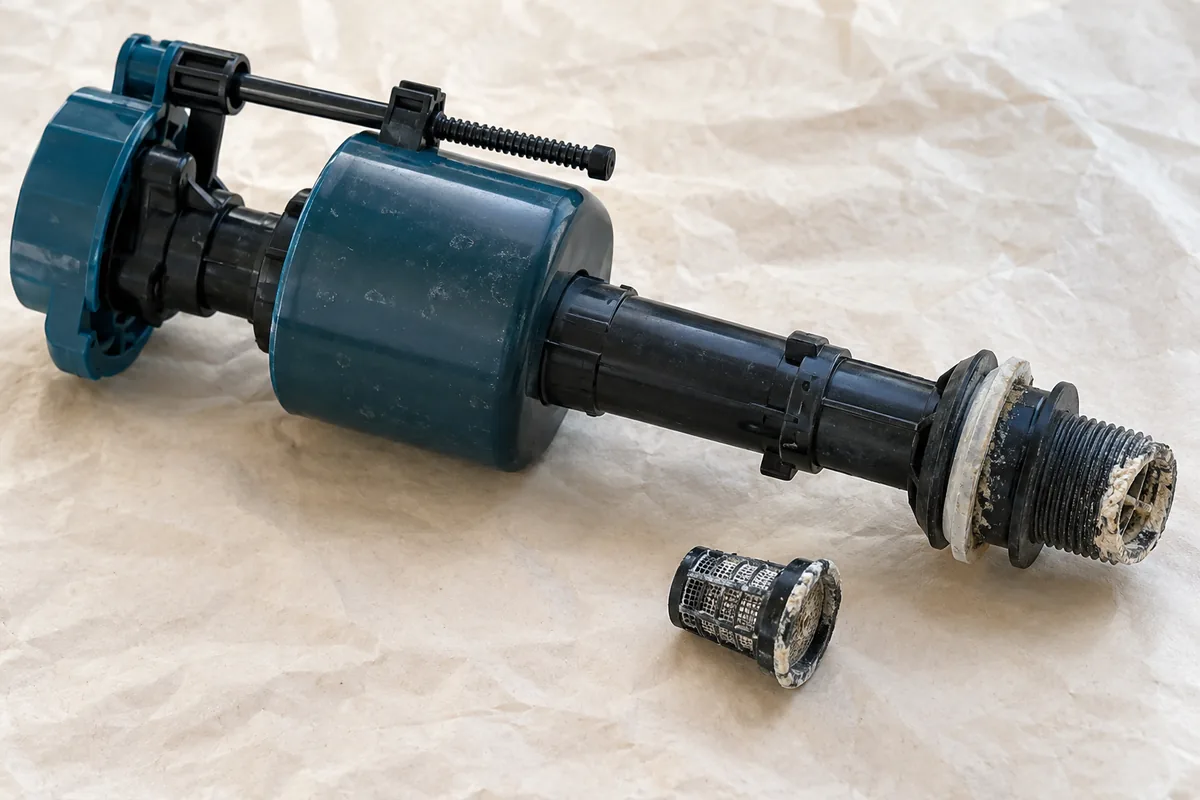
Yes. Some valves can become noisy or refill slowly when their serviceable inlet or internal passages collect debris. A worn valve can behave differently from a clean but restricted one. Korky’s noisy-valve troubleshooting provides product-specific checks; it is not permission to take apart an unfamiliar valve while it remains pressurized.
Before any component service, shut off the water safely and follow the actual product instructions. Do not assume all caps remove the same way. If you cannot identify the part, the shutoff will not close normally, or water appears outside the tank, stop and arrange help. Never disconnect the supply connector to experiment with flow while the line is live.
Water conditions must be checked at the property. A noise alone does not establish high pressure, hard water, or a neighborhood-wide water problem. Describe any visible deposits and whether other fixtures make unusual sounds, rather than choosing a pressure regulator or treatment system based only on a hissing toilet.
How can you check where the sound comes from?
To check where the sound comes from, observe whether it occurs only during tank filling or when another fixture operates. Sound can travel through a nearby supply pipe or wall. A squeal, a hiss, and a knock when water stops are different descriptions; use the closest description you can and record a short audio clip if convenient.
Do not remove wall finishes or climb into inaccessible spaces simply to locate the noise. Report visible leaks, dampness, and timing. If the bowl is quietly losing water instead of the tank refilling, the bowl-water-level guide addresses that separate pattern.
The United States Environmental Protection Agency (EPA) home-maintenance guidance recommends investigating a constantly running toilet and other operational faults. A change in sound is useful evidence, but a provider still needs to establish what the water is doing before recommending a repair.
What should you request from a repair provider?
Explain whether the sound is constant, occurs only after a flush, or returns between uses. Give the toilet model if accessible, mention previous valve or seal replacements, and state whether the tank reaches its normal level. Ask the provider to distinguish an inlet fault from tank-to-bowl leakage before quoting replacement parts.
For an Owasso inquiry, use the running-toilet repair information to prepare your symptom description. Owasso Toilet Fix is an information and referral website; independent providers set their own availability, credentials, pricing, and repair terms.
After the agreed work, check a normal refill and listen again while the bathroom is unused. Confirm that the valve stops, the water remains at its intended level, and no external connection drips. If the hiss returns, report the timing and the work already completed rather than repeatedly altering adjustments that may have been correctly set.