
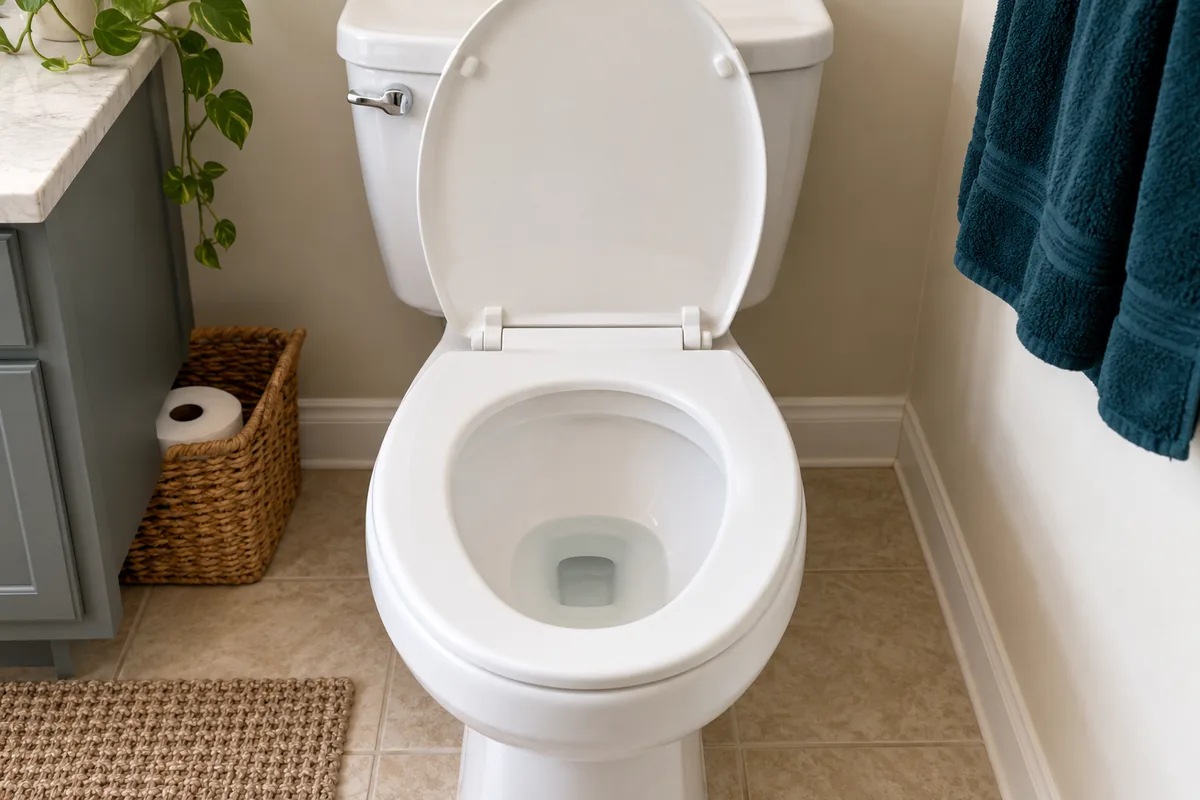
How do tank-water loss and bowl-water loss differ?
Tank-water loss can trigger repeated refilling; bowl-water loss lowers the standing water in the bowl. The tank stores water for the flush. The bowl retains water in its trapway after refilling. A tank that loses water and intermittently refills may have an internal flush-seal leak, while a bowl that becomes unusually low requires a different sequence of checks.
Describe the actual location when calling for help. “The toilet loses water” can mean a falling tank level, a low bowl after flushing, moisture on the floor, or a combination. Note whether the bowl starts low or reaches its usual level first. Do not take measurements by flushing again if the toilet already leaks or threatens to overflow.
What if the bowl never refills to its usual level?
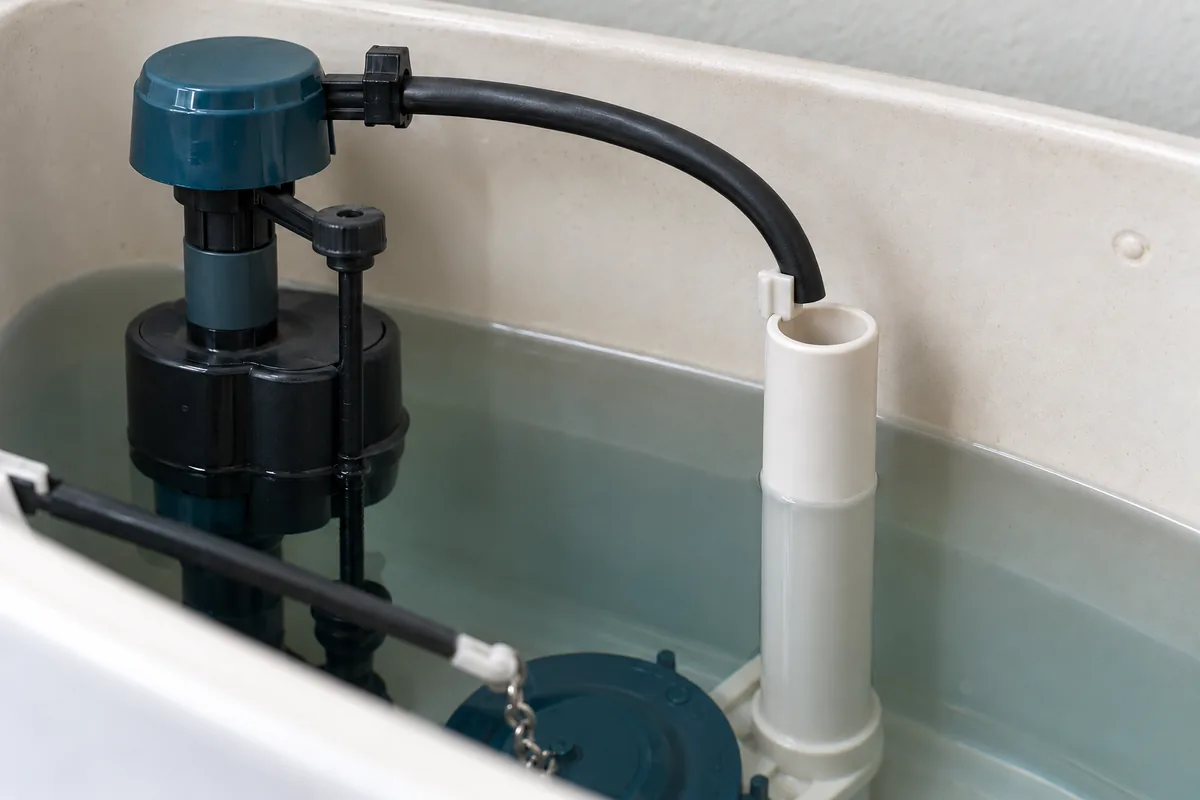
On many gravity-flush toilets, a small refill hose directs part of the incoming water toward the bowl during tank filling. A displaced hose, incompatible adjustment, or refill problem can leave the bowl low even when the tank appears full. Korky’s bowl-refill guide explains this distinction for conventional systems.
Observe accessible hose placement without forcing connections. The hose end needs the arrangement specified by the valve and toilet manufacturer. Pushing it down into the overflow tube or below the tank waterline can introduce siphoning problems. Kohler’s refill-hose guidance describes why hose position matters.
That hose issue must not be confused with every possible cause of a bowl losing water later. If the bowl reaches its expected level and then drops during nonuse, report that timing. Replacing a hose or raising the tank waterline may fail to address the actual cause.
What does the timing suggest?
A low level immediately after flushing points first toward refill performance or incomplete operation. A gradual change in a toilet that sits unused can involve evaporation. A level change associated with other fixtures, gurgling, or slow drainage calls for evaluation of the drainage and venting system.
These are clues rather than a diagnosis. Record when the change is noticed and whether the bathroom has been used normally. If the problem happens after another fixture operates during ordinary household use, mention which fixture. Do not deliberately run water through a drainage system that is backing up simply to demonstrate the interaction.
Could a crack or another leak be responsible?
Yes. A crack or another leak can lower the bowl water level and requires professional assessment. Not every defect is visible from above, and an absence of a floor puddle does not prove that the fixture is sound. Report any visible porcelain mark, dampness, odor, or stain below the bathroom.
Do not treat a low bowl as proof of a failed wax ring. The floor seal connects the waste outlet to the drain; it is not the same part that normally determines the bowl’s standing water level. Base leaks and bowl-level changes may coexist, but they must be investigated separately. The base-leak article explains how water from several locations can collect beside the toilet.
Do not patch suspected structural porcelain damage with glue and continue using the fixture. Stop use when the bowl is cracked, unstable, or leaking. Ask a provider to identify the water path and whether the toilet can safely remain in service.
When should a professional check the drain or vent?
Arrange assessment when low water occurs with gurgling, recurring clogs, persistent drain odors, or problems at more than one fixture. A provider may need to distinguish a fixture defect from a shared drain or vent issue. The required inspection depends on the symptoms and installation, not a blanket assumption that every low bowl needs a sewer camera.
Do not climb onto the roof to inspect a plumbing vent as a routine homeowner check. Roof access, concealed drains, and shared building systems introduce hazards and access requirements beyond observing the toilet. In a rental or multi-unit building, report the problem to the responsible manager as well as describing affected fixtures.
What information makes the service inquiry useful?
Provide the toilet model, the usual bowl level compared with what you now see, the timing, and any recent tank-part replacement. State whether tank filling seems normal, whether the bowl makes noise, and whether water appears elsewhere. A photo taken when the level is normal and another when it is low can communicate the difference without unnecessary experimentation.
For an Owasso inquiry, the toilet-leak repair page explains what to report. The Owasso Toilet Fix homepage describes the referral service; an independent business confirms coverage, diagnosis, scope, and price. Keep the distinction between an internal refill issue and an external leak clear so the provider can plan an appropriate inspection.
After repair, observe the bowl after its normal refill and during a later period of nonuse. Report a continuing pattern rather than adding water repeatedly and assuming the cause has disappeared.