
Which toilet problems are commonly repairable?
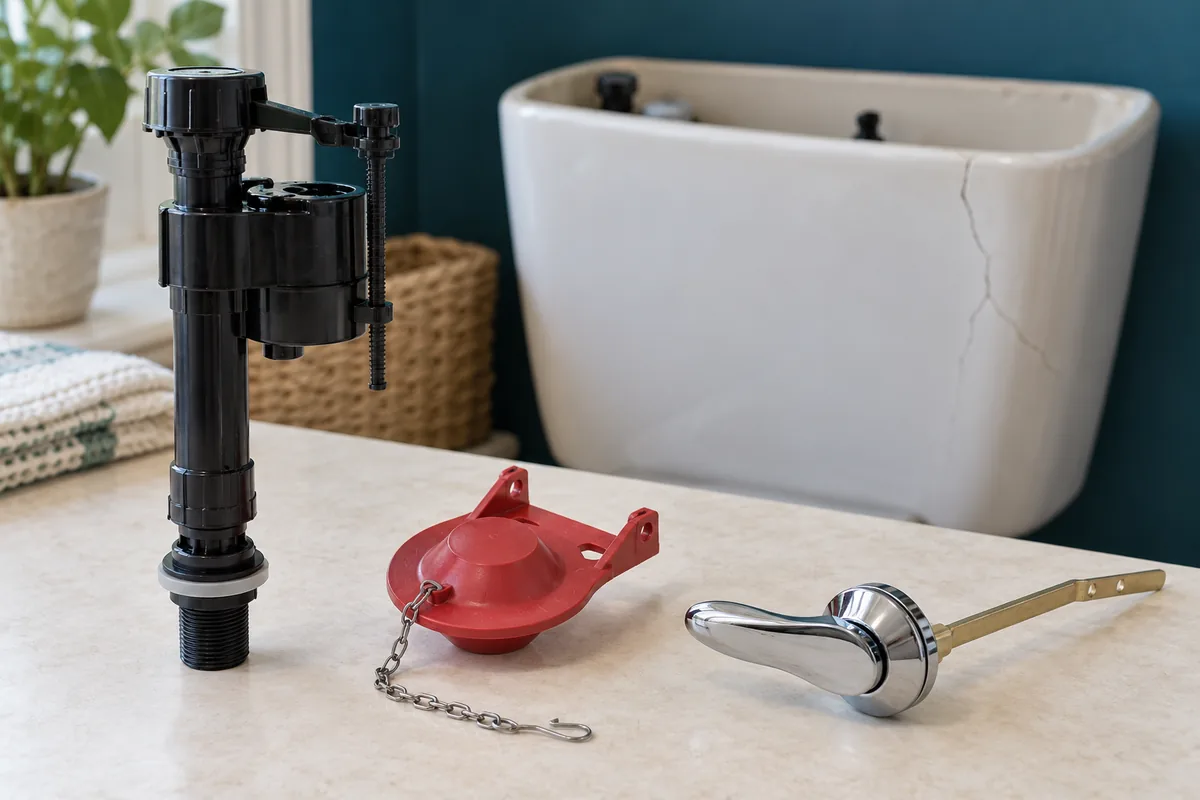
Problems with handles, flappers, fill valves, supply connectors, and floor seals are commonly repairable when the porcelain and installation are sound. A sticking handle, incompatible flapper, worn fill valve, leaking supply connector, or failed floor seal can often be addressed while retaining a sound toilet. The exact scope still depends on the model and installation.
Ask what has failed and how the provider established it. A toilet that runs does not automatically need replacement, and a new tank kit does not correct a damaged floor flange. A useful recommendation connects the observed problem to the proposed work rather than relying on the fixture’s age or an unsupported statement that “all old toilets fail.”
When does porcelain damage change the decision?
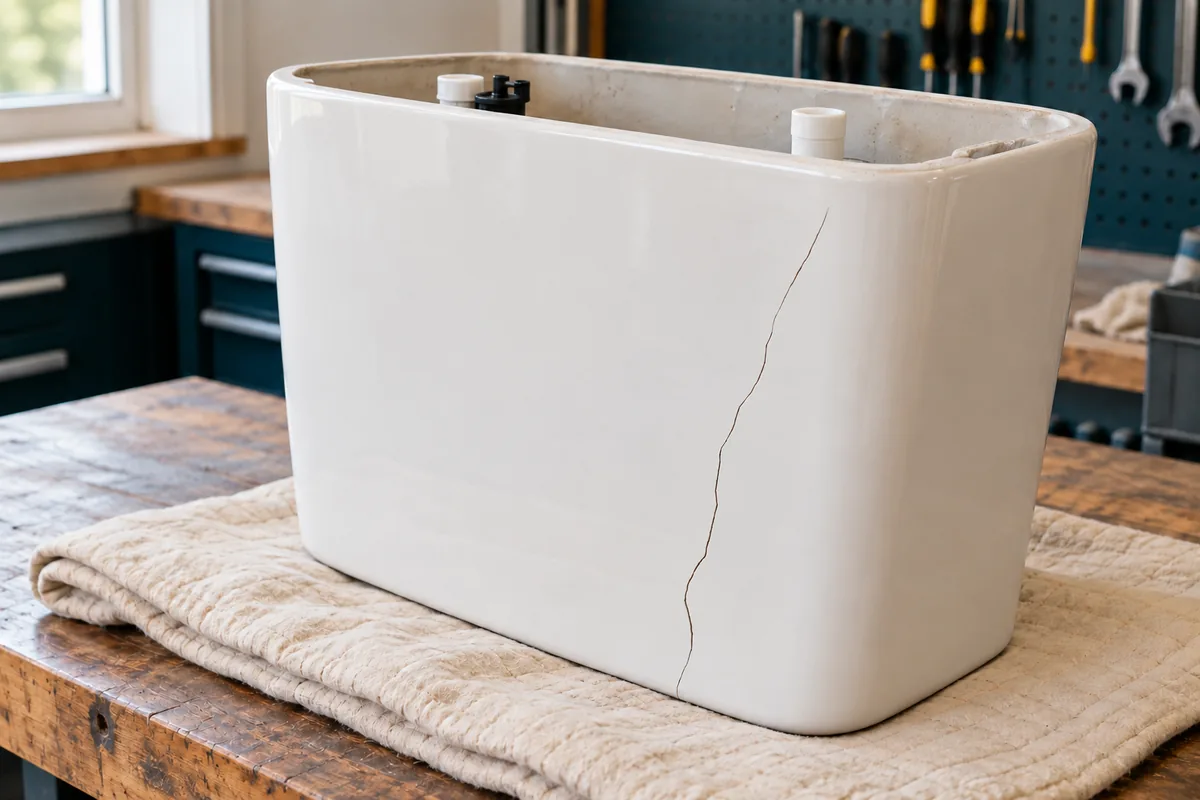
A leaking or structurally compromised bowl or tank needs prompt assessment and usually replacement of the affected compatible fixture component or the entire toilet. Stop using cracked porcelain that leaks or appears unstable. Do not lean on the fixture, tighten mounting bolts harder, or apply a surface patch as a substitute for assessing structural damage.
The location of the mark matters. A scratch in a lid is not the same condition as a crack through a water-holding or load-bearing area. If the distinction is uncertain, request an assessment rather than accepting reassurance from appearance alone. A provider should explain whether a compatible replacement tank exists and whether other parts of the fixture are suitable for reuse.
What if the toilet has needed several repairs?
Review whether the repairs addressed separate worn components or repeated the same unresolved problem. Several unrelated hardware replacements do not necessarily make sound porcelain unsuitable. Repeated clogs, rocking, or floor-seal failures may instead indicate an installation or drainage issue that a new toilet alone will not correct.
Keep invoices, part descriptions, and the sequence of symptoms. Ask whether the proposed replacement would address the cause or merely replace the visible fixture. If the flange, supply valve, or supporting floor needs work, request that scope separately. This avoids comparing a small component repair with a replacement quote that silently excludes necessary installation corrections.
How do parts availability and fit affect the choice?
Parts availability and fit determine whether a compatible repair is practical. A serviceable toilet may use a proprietary flush assembly, seal, or tank connection. Confirm that the needed part is available and compatible before concluding that a “universal” component will work. Conversely, an unfamiliar part does not prove that the entire toilet must be discarded.
Replacement selection requires more than choosing a bowl shape. The drain connection, rough-in, clearance, supply arrangement, and installation type must suit the bathroom. A floor-mounted gravity toilet and a wall-hung or pressure-assist fixture are not automatically interchangeable. The manufacturer’s installation guidance is a starting reference; the selected toilet’s own instructions govern its fit and setup.
If a provider recommends replacing only the tank, ask how compatibility was verified. Tanks that look similar can have different mounting, gasket, and flush requirements. Do not combine unmatched porcelain components based only on holes that appear close enough.
Should water efficiency influence replacement?
Yes. Water efficiency is worth considering when replacement is already appropriate, together with flush performance. The United States Environmental Protection Agency (EPA) WaterSense toilet information explains its independently certified efficiency and performance criteria. Check the actual model’s specifications rather than assuming every modern-looking toilet has the same efficiency.
Water savings do not create a guaranteed financial payback for every household. Usage, utility charges, the condition of the existing toilet, and the installed price differ. Do not base decisions on invented local averages or a universal percentage-of-replacement-cost rule. Ask for a written comparison of realistic options for your installation.
How should you compare repair and replacement proposals?
To compare repair and replacement proposals, request a diagnosis, the proposed scope, and a price for each suitable option. Confirm whether parts, removal, disposal, supply work, flange corrections, and testing are included. Ask what happens if hidden floor damage appears after the toilet is lifted and whether any additional work needs separate authorization.
Discuss warranty terms directly with the business and, where relevant, the product manufacturer. A parts warranty may not include labor or installation defects. Do not assume the website referring the call guarantees workmanship or manufacturer coverage.
For an Owasso inquiry, the cracked-toilet assessment page explains when damaged porcelain needs attention. Owasso Toilet Fix provides information and referrals, not a diagnosis or repair guarantee. Independent providers set availability, qualifications, prices, and terms.
What is a sensible final decision?
Keep a sound fixture when a suitable repair addresses the confirmed cause and the expected scope makes sense for your needs. Consider replacement when structural damage, incompatible or unavailable parts, or persistent performance problems make a proper repair unsuitable. Address floor, flange, and drainage faults regardless of whether the toilet is retained.
For a separate discussion of budgeting examples, see the Owasso toilet repair cost guide. Use an actual inspection and written provider quote to make the decision; the condition of your fixture matters more than a generic lifespan or promised savings figure.